
Digital Advertising Insights · Sui Lian Chua · April 2026
Japan’s Remittance Market Insights 2026: Foreign Worker Growth, Regulatory Change, and Rising Competition
Japan’s remittance market is becoming increasingly competitive as foreign worker populations grow and regulatory changes create new opportunities for digital providers. This blog examines the trends driving market growth, the performance of leading remittance apps, and the strategies providers are using to reach diverse user communities.

Japan’s Remittance Market Is Undergoing Structural Change
Trend #1: Growing Demand for More Accessible Remittance Solutions
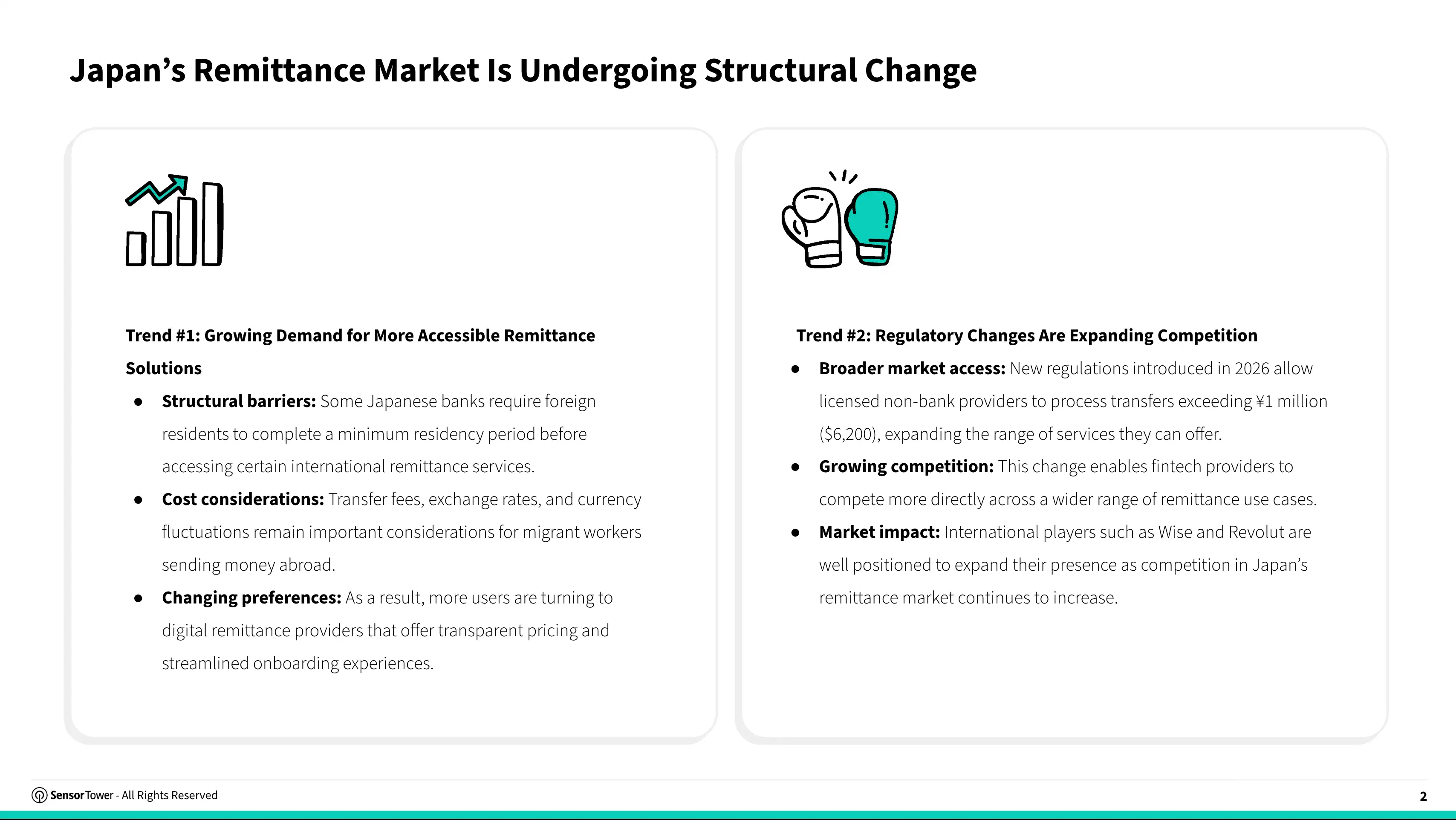
Structural barriers: Some Japanese banks require foreign residents to complete a minimum residency period before accessing certain international remittance services.
Cost considerations: Transfer fees, exchange rates, and currency fluctuations remain important considerations for migrant workers sending money abroad.
Changing preferences: As a result, more users are turning to digital remittance providers that offer transparent pricing and streamlined onboarding experiences.
Trend #2: Regulatory Changes Are Expanding Competition
Broader market access: New regulations introduced in 2026 allow licensed non-bank providers to process transfers exceeding ¥1 million ($6,200), expanding the range of services they can offer.
Growing competition: This change enables fintech providers to compete more directly across a wider range of remittance use cases.
Market impact: International players such as Wise and Revolut are well positioned to expand their presence as competition in Japan’s remittance market continues to increase.
Vietnam Becomes Japan’s Largest Source of Foreign Workers
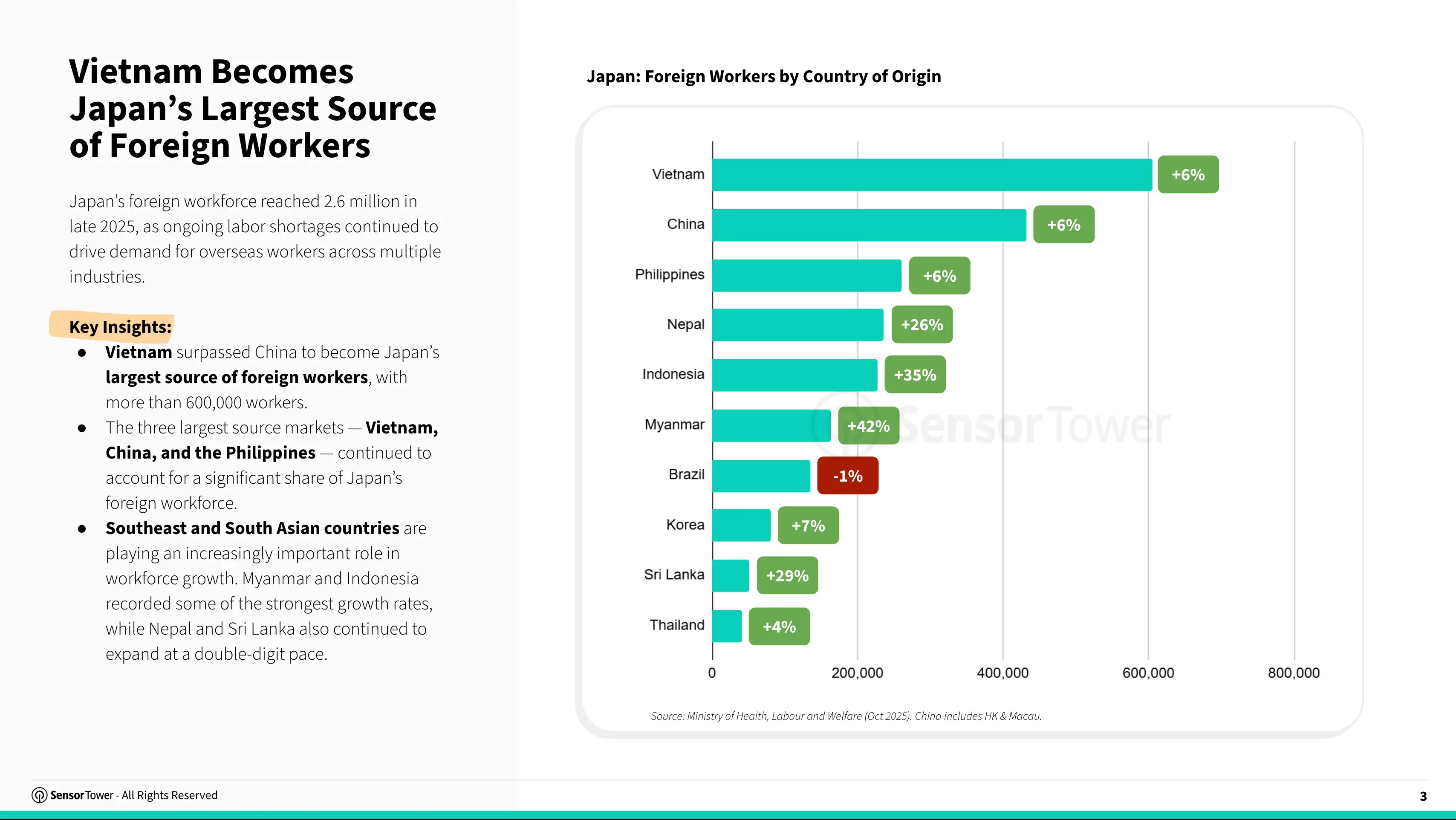
Japan’s foreign workforce reached 2.6 million in late 2025, as ongoing labor shortages continued to drive demand for overseas workers across multiple industries.
Key Insights:
Vietnam surpassed China to become Japan’s largest source of foreign workers, with more than 600,000 workers.
The three largest source markets — Vietnam, China, and the Philippines — continued to account for a significant share of Japan’s foreign workforce.
Southeast and South Asian countries are playing an increasingly important role in workforce growth. Myanmar and Indonesia recorded some of the strongest growth rates, while Nepal and Sri Lanka also continued to expand at a double-digit pace.
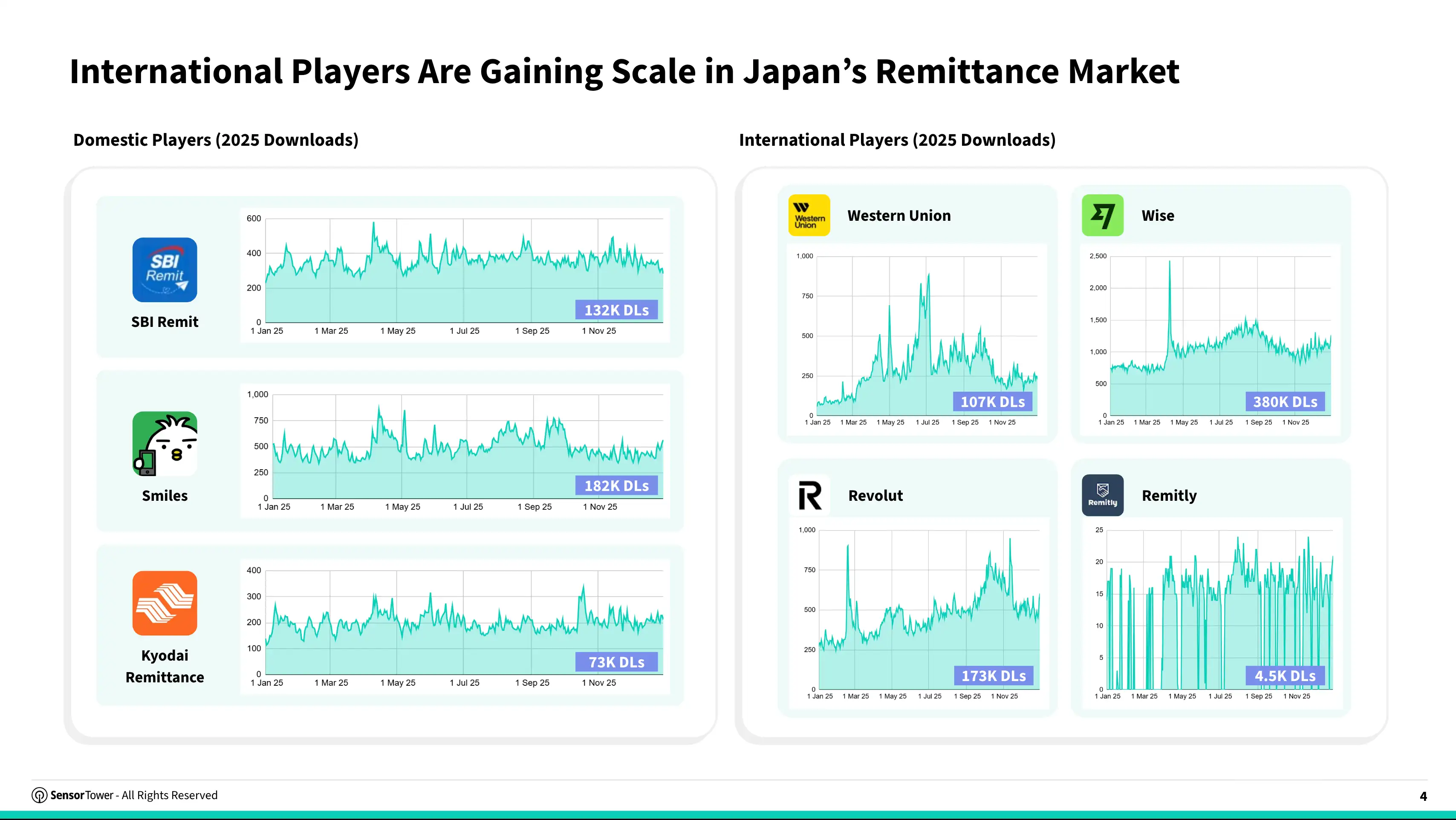
International Players Are Gaining Scale in Japan’s Remittance Market
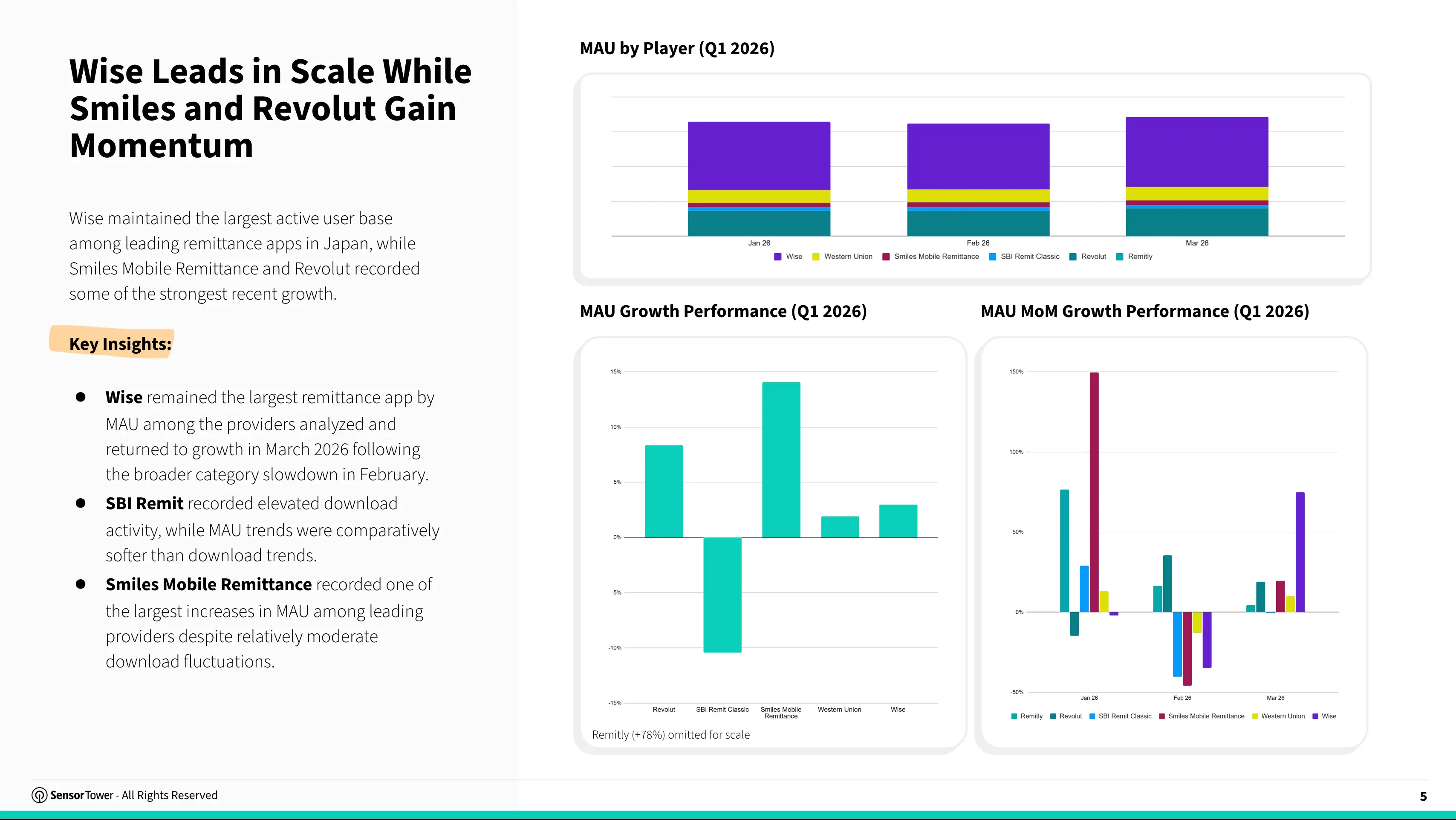
Wise Leads in Scale While Smiles and Revolut Gain Momentum Wise maintained the largest active user base among leading remittance apps in Japan, while Smiles Mobile Remittance and Revolut recorded some of the strongest recent growth.
Key Insights:
Wise remained the largest remittance app by MAU among the providers analyzed and returned to growth in March 2026 following the broader category slowdown in February.
SBI Remit recorded elevated download activity, while MAU trends were comparatively softer than download trends.
Smiles Mobile Remittance recorded one of the largest increases in MAU among leading providers despite relatively moderate download fluctuations.
Creatives Reflect Different Approaches to User Acquisition
Wise: Targeted Messaging
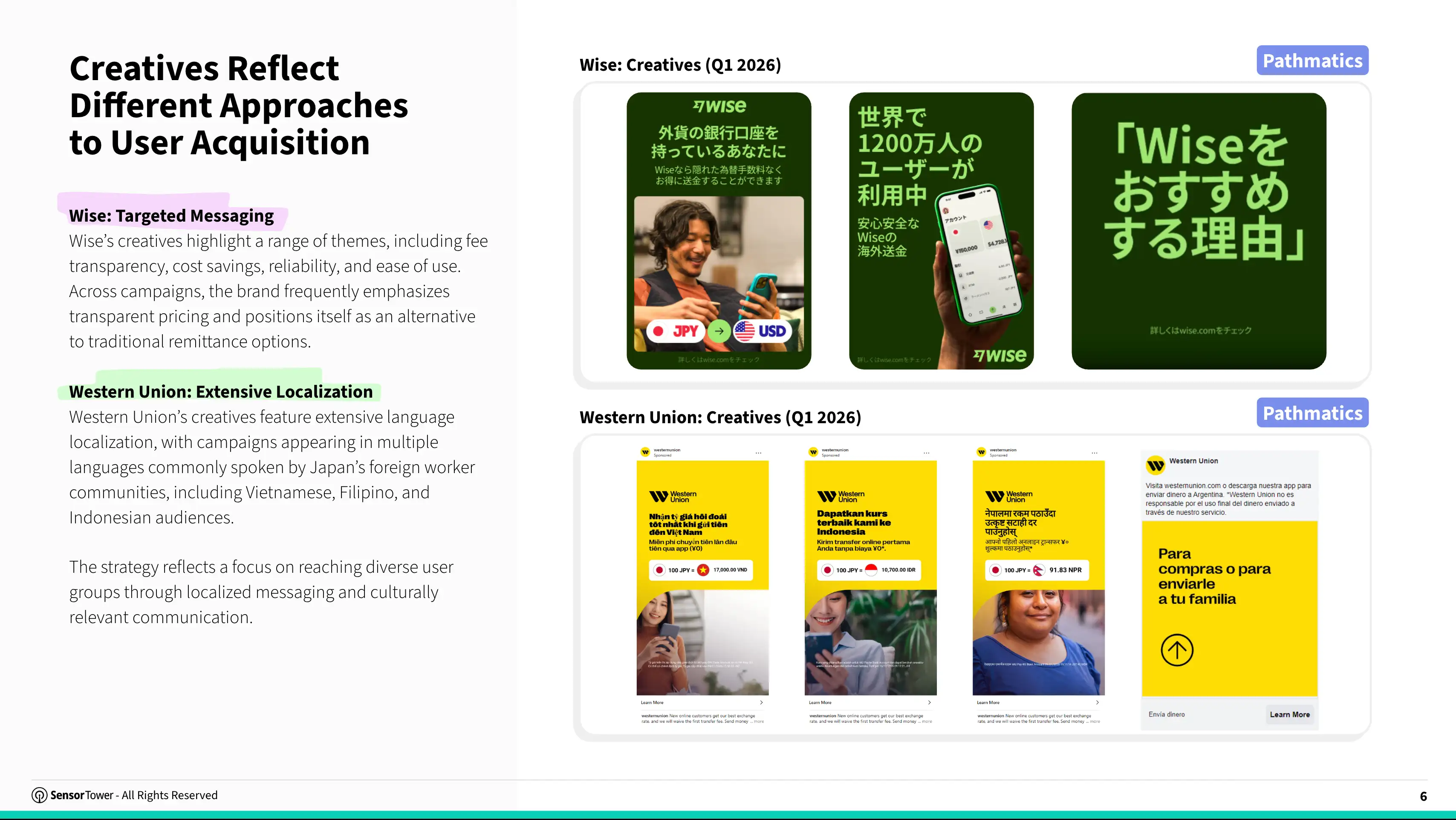
Wise’s creatives highlight a range of themes, including fee transparency, cost savings, reliability, and ease of use. Across campaigns, the brand frequently emphasizes transparent pricing and positions itself as an alternative to traditional remittance options.
Western Union: Extensive Localization
Western Union’s creatives feature extensive language localization, with campaigns appearing in multiple languages commonly spoken by Japan’s foreign worker communities, including Vietnamese, Filipino, and Indonesian audiences.
The strategy reflects a focus on reaching diverse user groups through localized messaging and culturally relevant communication.