

AI Insights · Timothy · April 2022
Top 5 Travel Apps on iOS in South America Q1 2022
Discover the performance trends of the top 5 travel apps on iOS in South America for Q1 2022. Sensor Tower data reveals insights into downloads, active users, and revenue.
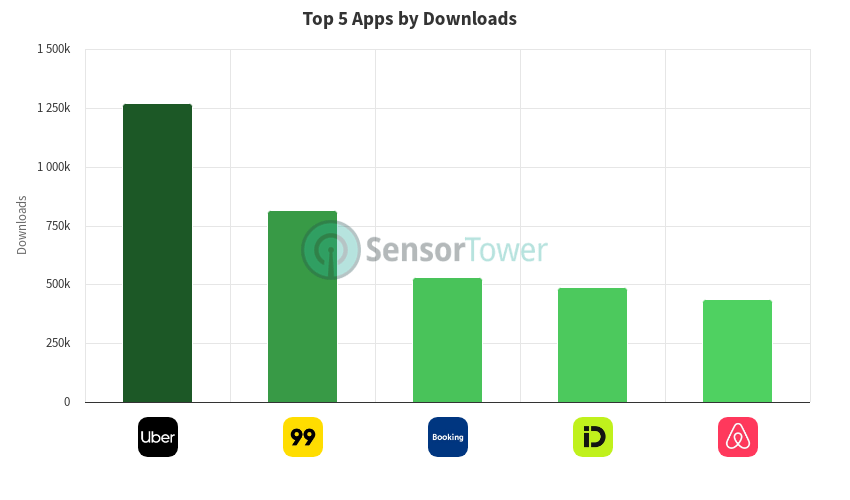
Performance of Top 5 Travel Apps on iOS in South America - Q1 2022
The first quarter of 2022 saw varied performance trends among the top 5 travel apps on iOS in South America. Here’s a breakdown of their weekly downloads and active user metrics, based on data from Sensor Tower.
Uber - Request a ride
Uber maintained a high volume of weekly downloads, starting with approximately 129K at the end of December and experiencing a slight dip to about 88K in mid-January. Downloads then saw a gradual increase, peaking at 112K by early March. Active users consistently grew from 2.2M at the end of December to a peak of 2.6M in early March, before slightly declining to 2.4M by the end of the quarter.
99 - Private drivers and Taxi
99 - Private drivers and Taxi saw a steady increase in weekly downloads, beginning with roughly 76K at the end of December and peaking at 78K in early March. Active users also showed a positive trend, growing from 1.1M at the end of December to about 1.3M in early March, with a slight dip towards the end of the quarter.
Booking.com: Hotels & Travel
Booking.com: Hotels & Travel had a relatively stable download rate, starting at around 50K at the end of December and fluctuating around 38K to 52K throughout the quarter. Active users saw a decline from 922K at the end of December to around 723K by the end of March, with a brief peak of 808K in late February.
inDrive. Save on city rides
inDrive experienced an upward trend in downloads, starting at about 45K at the end of December and reaching over 44K by mid-March. Active users also increased from 663K at the end of December to approximately 691K by the end of March, peaking at 699K in mid-March.
Airbnb
Airbnb’s weekly downloads showed a gradual decline from around 50K at the end of December to about 27K by the end of March. Active users followed a similar trend, decreasing from 508K at the end of December to around 347K by the end of March, with a peak of 512K in early January.
For more detailed insights and analysis, visit Sensor Tower.